
Yoga or Pilates?
It is one of the most common questions people ask when they want to become stronger, improve flexibility, move better or simply add something new to their weekly routine.
From the outside, Yoga and Pilates can look surprisingly similar. Both are generally practised on a mat. Both involve controlled movement. Both can improve strength, mobility and body awareness.
But once you actually take a class, they can feel very different.
At The London Academy of Dance (TLAD) in Southwark, London, we offer both Yoga and Pilates classes, so we are firmly in the you don't necessarily have to choose camp.
But if you are wondering which one is right for you, here is what you need to know.
What Is the Main Difference Between Yoga and Pilates?
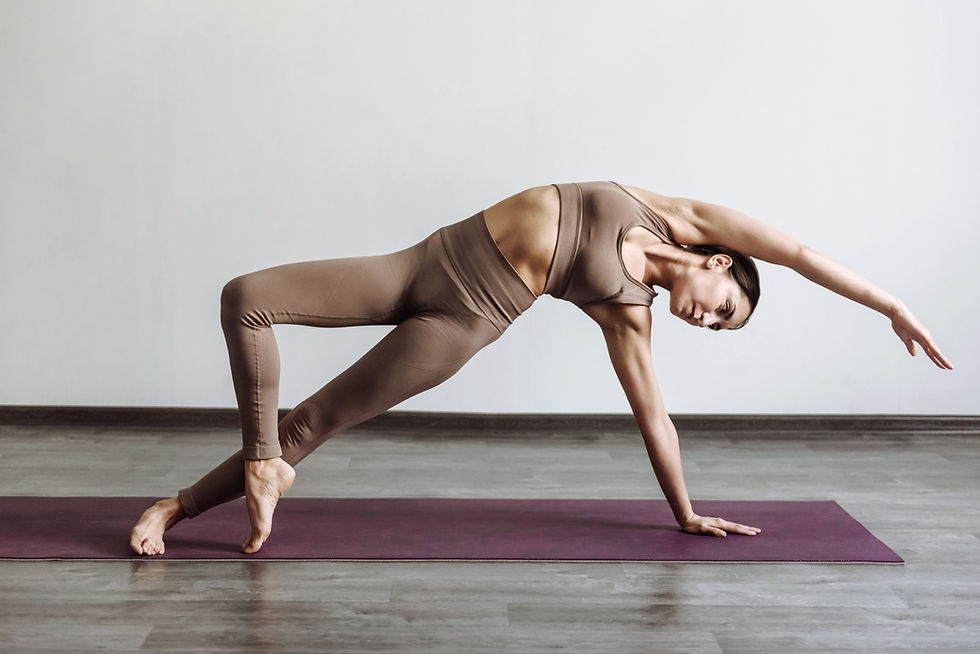
The simplest distinction is that Pilates tends to centre around controlled movement, core strength, stability and alignment, while Yoga combines physical postures with movement, mobility, balance and breathing.
There is plenty of crossover.
A Yoga class can absolutely build strength.
A Pilates class can absolutely improve flexibility.
Both can challenge your balance, coordination and body awareness.
The difference is often in how you get there.
What Is Pilates?
Pilates is a movement system originally developed by Joseph Pilates.
In a Mat Pilates class, exercises are performed primarily on the mat using your own body weight, although equipment such as resistance bands, Pilates rings and light weights can also be introduced.
Pilates places particular emphasis on control, alignment and core stability.
Do not mistake controlled movement for easy movement.
A tiny, precise exercise performed properly can make muscles work significantly harder than a much bigger movement performed without control.
At TLAD, our Pilates classes in Southwark range from traditional Mat Pilates to more challenging Strong Pilates sessions incorporating additional resistance.
What Is Yoga?
Yoga has a much longer history and incorporates physical postures, breathing and mindful movement.
Depending on the style of Yoga, classes can range from slower and more restorative practices to dynamic flowing sequences that provide a considerable physical challenge.
At TLAD, Yoga gives you an opportunity to work on strength, mobility, flexibility, balance and body awareness, while also creating space to focus on your breathing and step away from the pace of everyday London life.
Yoga vs Pilates for Strength
Winner: It depends on the kind of strength you want to develop.
Pilates is excellent for developing controlled strength, particularly through the core and the muscles responsible for stability.
You may find yourself performing relatively small movements while wondering why your muscles are suddenly shaking.
Yoga develops strength differently.
Supporting your own body weight through poses and transitions can challenge your arms, shoulders, legs and core while simultaneously demanding balance and mobility.
If your priority is core strength and controlled muscular work, you may naturally gravitate towards Pilates.
If you like the idea of combining bodyweight strength with mobility and flowing movement, Yoga may appeal more.
Or do both.
We did warn you that we were not going to make choosing easy.
Yoga vs Pilates for Flexibility
Winner: Yoga — but Pilates helps too.
If improving flexibility and range of movement is your main objective, Yoga may have the edge.
Yoga frequently takes the body through a wider variety of positions and encourages progressive work on mobility and flexibility.
Pilates also requires mobility and can help you move more freely, but flexibility is generally not its primary focus.
And no — you do not need to already be flexible to start Yoga.
That would rather defeat the point.
Yoga vs Pilates for Core Strength
Winner: Pilates.
Pilates and core strength have become
Still deciding between Yoga and Pilates? Why choose just one?
Try a class and discover what feels best for your body.
