
What Is Strong Pilates? The Class That Bridges Pilates and Strength Training

There's a conversation that happens in Pilates studios in London. It usually goes something like this:
"I love Pilates, but I want something… more."
More intensity. More resistance. More of that satisfying, muscles-actually-worked feeling you get from a strength session — without giving up the control, the technique, and the focus on your body that makes Pilates worth doing in the first place.
That's what Strong Pilates is. It takes everything that works about mat Pilates — the core engagement, the precision, the emphasis on how you move rather than just how much — and adds resistance tools on top. Bands. Light weights. Pilates rings. The kind of equipment that turns a controlled exercise into a controlled exercise that also makes you sweat.
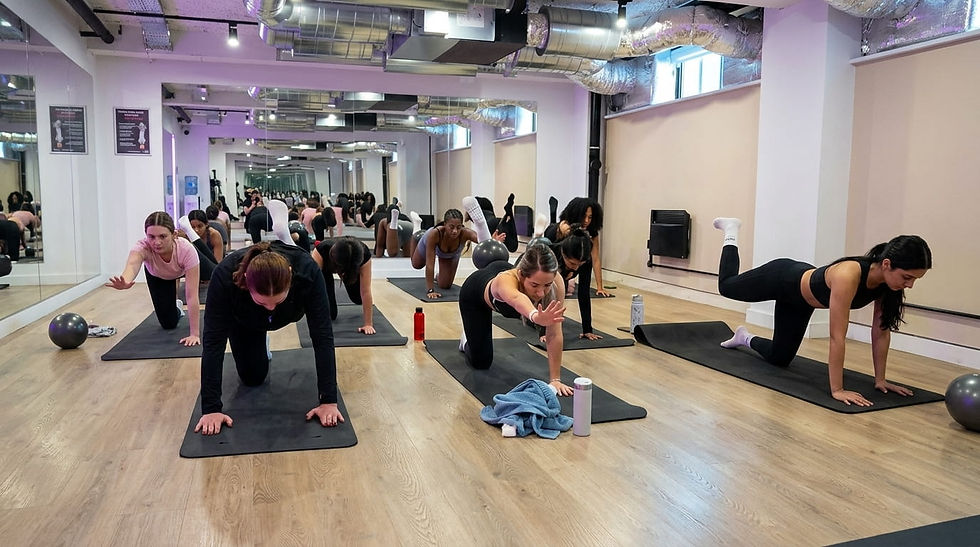
We run Strong Pilates four times a week at The London Academy of Dance in Southwark, and it's become one of our most popular classes. Here's what it actually involves, who it's for, and what to expect if you've never tried it.

How Strong Pilates Differs from Regular Mat Pilates
If you've done mat Pilates, you already know the basics: controlled movements, core engagement, breathing with intention, working muscles through precise ranges of motion. Mat Pilates uses your bodyweight as resistance, and it's genuinely effective — especially for posture, core strength, and spinal health.
Strong Pilates keeps all of that. The same principles, the same attention to form, the same instructor watching you to make sure you're doing it right. What changes is the load.
By adding resistance bands, light dumbbells, and Pilates rings into the sequences, Strong Pilates asks your muscles to work harder through those same controlled movements. A glute bridge becomes a glute bridge with a resistance band around your thighs. A chest press becomes a chest press with light weights and a slow, controlled tempo that makes two kilograms feel like ten.
The difference in the room is noticeable. Mat Pilates is quiet, focused, almost meditative in its concentration. Strong Pilates has the same focus, but there's an edge to it — more effort, more visible exertion, more of that post-workout glow that tells you something happened.
The key thing: Strong Pilates doesn't sacrifice technique for intensity. You're not throwing weights around. Every movement is still deliberate, still controlled, still precise. The resistance is there to make the Pilates harder, not to turn it into something else.

How It Compares to Other Options
If you're weighing up where Strong Pilates fits, here's how it stacks up:
Strong Pilates vs Mat Pilates
Mat Pilates is the foundation. It builds core strength, improves posture, and teaches you how to move well using just your bodyweight. Strong Pilates takes those foundations and adds external resistance. Think of mat as learning the language, and Strong Pilates as having more complex conversations in it.
Choose mat if: you're new to Pilates, recovering from injury, or want a calmer, more restorative session. Choose Strong if: you already have the basics and want more physical challenge.
Strong Pilates vs Reformer Pilates
Reformer studios use a machine that provides resistance through springs. It's effective, but it costs £25-35 per class and locks you into a specific piece of equipment. Strong Pilates achieves a similar resistance effect using portable tools — bands, weights, rings — at a fraction of the cost. You're also building more functional strength because nothing is assisting your movement.
Choose a reformer if: you want machine-assisted resistance and don't mind the price point.
Choose Strong if: you want resistance-based Pilates without the reformer price tag, and you value functional, unassisted strength.
Strong Pilates vs HIIT
HIIT is fast, explosive, high-impact. It burns a lot of calories in a short time, but it's tough on joints and doesn't teach you much about how your body moves. Strong Pilates is slower, more controlled, and low-impact — but don't mistake that for easy. The resistance and the tempo create a deep muscular fatigue that HIIT doesn't reach.
Choose HIIT if: your primary goal is maximum calorie burn and you don't have joint issues.
Choose Strong Pilates if: you want strength that's built with control, your joints need protecting, or you've burned out on high-impact training.
If you're also considering Barre or Zumba, we recently put together a comparison of all three.
What a Typical Strong Pilates Class Looks Like
A class runs 45 minutes. Here's roughly how it breaks down:
Warm-up (5-10 minutes)
Breathing work and gentle mobilisation. This isn't filler — it prepares your deep stabilising muscles for the work ahead and gets your spine moving safely. You'll probably do some pelvic tilts, spinal articulation, and gentle core activation. If you've come from a desk, this alone will feel valuable.
Upper body block (10-12 minutes)
Working your arms, chest, shoulders, and upper back using light weights and resistance bands. The movements are small and controlled — think slow bicep curls with a pause at the top, chest presses at a tempo that makes your arms shake, and band pull-aparts that light up muscles between your shoulder blades you forgot existed.
Lower body block (10-12 minutes)
Glutes, thighs, and hamstrings. This is where the resistance bands earn their reputation. Banded bridges, clamshells, and leg press variations that build up a deep burn. The instructor will cue your form constantly — where your knees track, whether your pelvis is stable, how to avoid letting your lower back take over.
Core block (8-10 minutes)
The part where everything comes together. Planks with variations, dead bugs with weights, oblique work with the Pilates ring. Your core is already engaged from everything else, so this section feels like the finishing touch — intense but earned.
Cool-down and stretch (5 minutes)
Controlled stretching to release the muscles you've just worked. Hip flexors, chest, hamstrings, spine. You'll leave feeling genuinely longer.

Who Strong Pilates Is For
Strong Pilates fills a gap that a lot of people don't realise exists until they try it. It's for:
People who find mat Pilates "not enough." You've been doing regular Pilates for a while. You love the method but you want more intensity. Strong Pilates gives you that without abandoning what makes Pilates effective.
Gym-goers who want something different. You know how to lift. You understand resistance. But you've never worked with the kind of slow, controlled tempo that Pilates demands — and it challenges your muscles in ways that fast reps don't.
Desk workers with problem areas. If your shoulders are permanently tense, your back hurts by 3pm, and your hip flexors are concrete, Strong Pilates addresses all of that through strengthening the muscles that counteract sitting — with enough resistance to make a real difference. I'll find our lunchtime classes particularly helpful and impactful if you are sitting at your desk all day.
People who want results without impact. Bad knees, dodgy ankles, joints that protest when you run or jump — Strong Pilates gives you a genuine strength workout without any of that. Every movement is controlled and low-impact.
Anyone who's burned out on HIIT. You did the high-intensity thing. It worked for a while. Then your body started objecting, or you just stopped wanting to do it. Strong Pilates is challenging in a completely different way — slower, more deliberate, and easier to sustain long-term.
What Changes and When
Based on what we see with people attending Strong Pilates twice a week:
Weeks 1-2:
You'll feel it. Muscles you didn't know you had will make themselves known, especially through your core, glutes, and the backs of your arms. You'll also start learning the tempo — the slow, controlled speed that makes the resistance tools effective.
Weeks 3-4:
Your posture starts shifting. You'll sit taller without thinking about it. Standing feels different. The exercises that made you shake in week one start feeling manageable — which means it's time to increase your resistance band or pick up slightly heavier weights.
Weeks 6-8:
Visible changes. Your arms look more defined. Your waist feels firmer. The muscles in your legs have more shape. People who lift weights alongside Strong Pilates often notice their fitness form improving — Pilates teaches you to engage muscles more efficiently.
Weeks 10-12:
This is where people tend to say "my body feels different." Not just how it looks, but how it works. Fewer aches. Better balance. More strength in daily life — carrying shopping, picking up children, sitting through a long day without pain.
The Practical Stuff
When: Strong Pilates runs four times a week at TLAD:
Wednesday at 12PM
Thursday at 7:30AM and 12PM
Saturday at 11:15AM
Check the timetable for the latest schedule.
Where: The London Academy of Dance, Copperfield Street, Southwark SE1 — five minutes' walk from London Bridge, Borough, and Southwark stations.
Cost: From £10 per class. No membership needed. Pay per session or grab a class pack.
What to bring: Comfortable workout clothes, a water bottle, and a towel if you like. All equipment (mats, bands, weights, rings) is provided.
Do I need Pilates experience? It helps but isn't essential. If you've never done any Pilates, starting with a few mat sessions first will help you understand the fundamentals — breathing, core engagement, neutral spine. But if you're reasonably active and comfortable following instructions, you can jump straight in. Our instructor adapts exercises throughout, so you'll be working at your level.
Who teaches it? Meet our instructors on the team page.
Ready to Try Strong Pilates?
The best way to find out if it's for you is to try a single class. No commitment, no membership, no pressure. Book a session, turn up, work hard, and see how your body feels the next day.
If you've been doing mat Pilates and want more — or if you've been doing everything else and want something smarter — this is it.
FAQ
Is Strong Pilates harder than regular Pilates?
Yes — the added resistance makes it more physically demanding. But "harder" doesn't mean "not for beginners." The resistance level is adjustable (lighter bands, smaller weights), and the instructor offers modifications throughout. It's harder in the way that makes you stronger, not the way that makes you dread coming back.
Do I need Pilates experience before trying Strong Pilates?
It helps but isn't required. If you've done a few regular Pilates classes and understand the basics — breathing, core engagement, neutral spine — you'll feel more comfortable. If you're active and good at following cues, you can start with Strong Pilates directly. Let the instructor know it's your first time and they'll keep an eye on your form.
What equipment is used in Strong Pilates?
Resistance bands, light dumbbells (typically 1-3kg), and Pilates rings. All equipment is provided — you just need to show up in workout clothes. The tools are used to add load to familiar Pilates movements, not to create a completely different workout.
How many calories does Strong Pilates burn?
Roughly 250-400 calories per 45-minute session, depending on the intensity of your resistance and your body composition. That's more than standard mat Pilates (200-350) but less than high-intensity cardio like Zumba (400-600). The real benefit is in building lean muscle, which increases your resting metabolic rate — meaning you burn more calories throughout the day, not just during class.
Can I do Strong Pilates if I have back pain?
In many cases, yes — Pilates-based exercise is widely recommended for back pain management. However, Strong Pilates involves more resistance than standard mat work, so let your instructor know about your back pain before class. They'll modify exercises to keep you safe while still giving you a good workout. If your pain is acute or post-surgical, start with regular mat Pilates and progress to Strong once your instructor advises it.


Comments